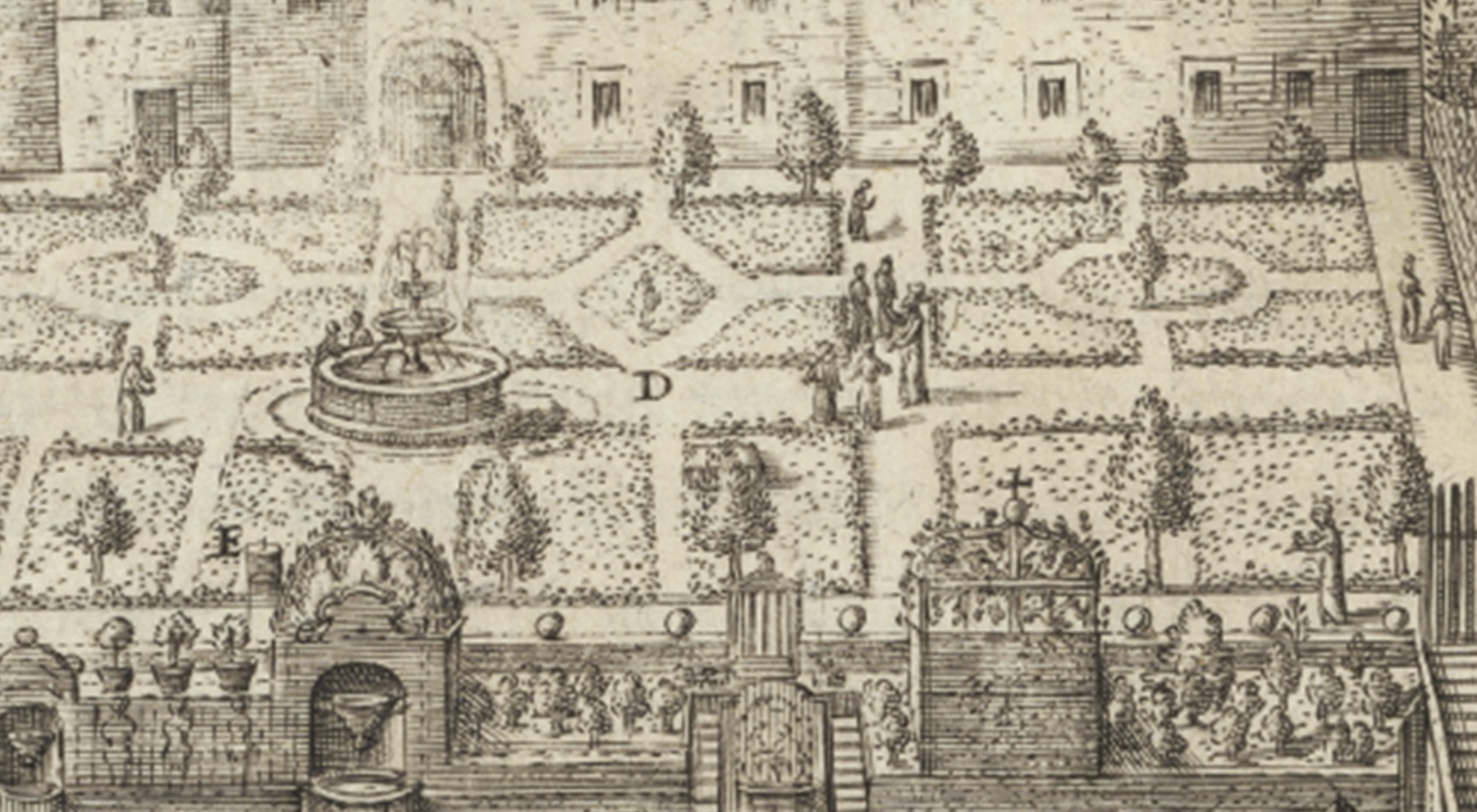
In this post, Brian Mac Cuarta introduces his new book, Francis Slingsby (1611–1642) and the Jesuits, the latest volume in the Society’s Camden series of scholarly primary editions.
This new Camden volume highlights Jesuit involvement in conversion to Catholicism in the Caroline era. It draws on the experience of one young man, Francis Slinsgby, in Rome and Ireland.
Themes include elite women as promotors of Catholic life in Wentworth’s Ireland; Jesuit efforts to liberate their protégé, imprisoned in Dublin; Slingsby’s friendship with the 3rd earl of Castlehaven; and travels in France with a visit to Loudun, scene of the celebrated exorcisms.
First-hand testimonies illuminate the experience of students from the Stuart kingdoms in Catholic educational institutions in mid-seventeenth century Rome.
To mark publication, the Introduction of Francis Slingsby (1611–1642) and the Jesuits is now available, free to read, via Cambridge University Press, until 1 November 2026.
Jesuits in England in the 1630s used to include the number of conversions to Catholicism in the annual letters detailing their activities. Most of these individuals remain in the historiographical shadows.
For Francis Slingsby (1611-1642) a uniquely detailed picture emerges of his conversion in 1633, during his continental sojourn after studies in Oxford, while visiting Rome. John Gerard SJ – veteran of the English mission and escapee from the Tower of London in 1597 – became his spiritual guide.
Slingsby was passionate about mathematics which he had studied at Trinity College, Oxford. In 1637-8 he travelled with the earl of Castlehaven, who became an Irish Confederate general in the 1640s, in France en route to Rome. We learn of their daily travel routine, and of their visit to Loudun, scene of celebrated exorcisms. While living as a seminarian at the English College, Francis studied at the Roman College and excelled at maths, corresponding with leading Italian mathematicians. Entering the Roman Jesuit novitiate in September 1641, he died at Naples in December 1642.
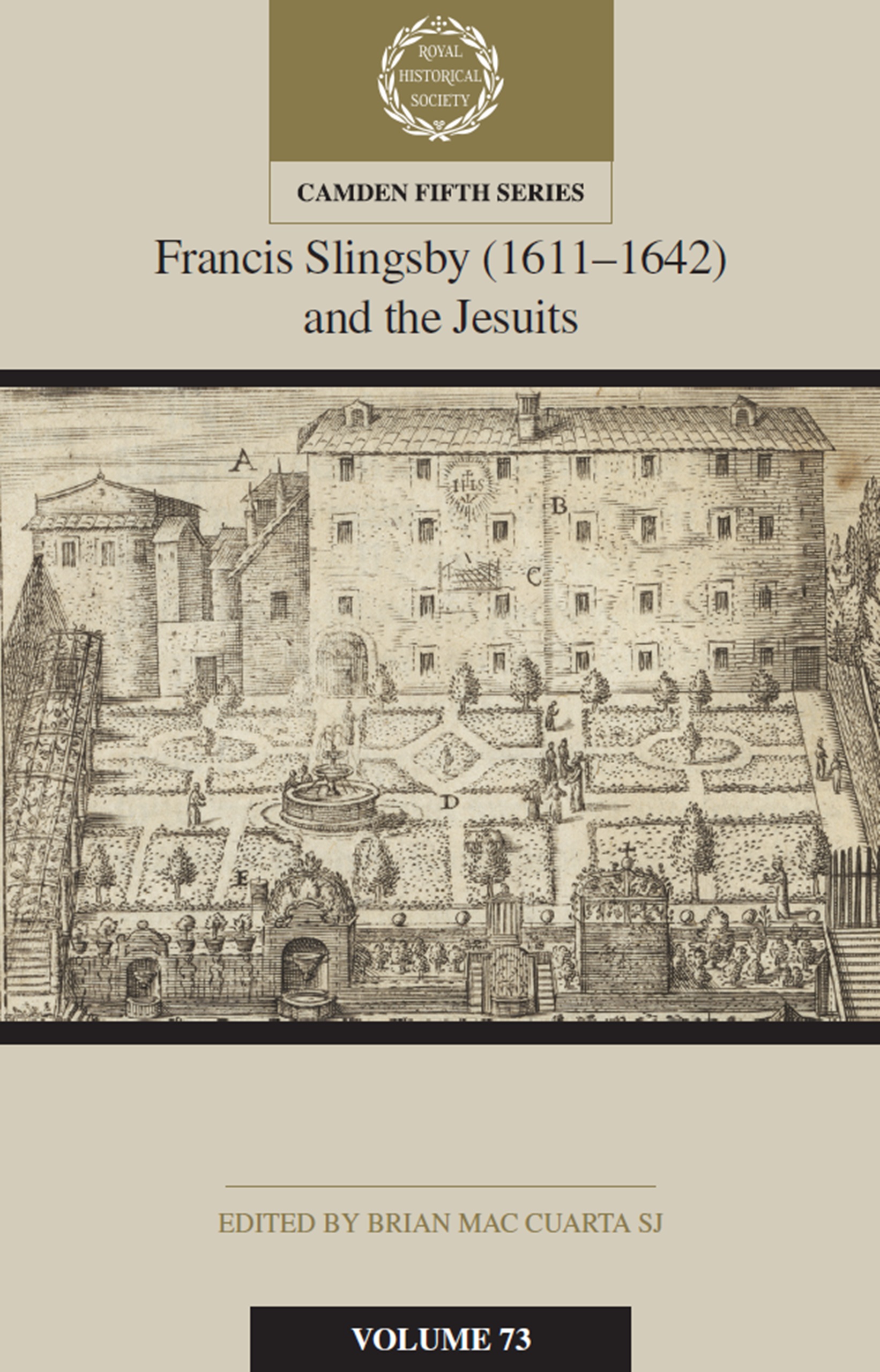
The materials in my new Camden volume date from after Slingsby’s conversion in the early 1630s. They comprise ongoing correspondence with Father John Gerard, together with a smaller number of letters from his family, and from Father General Vitelleschi. Slingsby’s answers to the entrance questionnaire at the English College, and the novitiate, provide further biographical information.
At Slingsby’s death, the Jesuit authorities deemed his conversion story and religious vocation worthy of inclusion in a series of exemplary short biographies which would edify the Society’s members. Spiritual profiles were commissioned from men who had known him – in Dublin and Rome – as guides and as contemporaries. Personal reminiscences of Roman student life in these institutions broaden our understanding of Catholic youth culture. The present edition is based on the documents so assembled.
In Rome, Slingsby made a deep impression on Jesuit general Vitelleschi and on the cardinal secretary of state, Francesco Barberini … Vitelleschi and Barberini took a keen interest in Slingsby’s progress in Catholic life.
While in Rome in 1633-4 Slingsby made a deep impression on Jesuit general Vitelleschi and on the cardinal secretary of state, Francesco Barberini. Here was a young man with impeccable manners, a grandmother who was sister to successive earls of Northumberland, an Oxford education, and fluency in French and Italian. Vitelleschi and Barberini took a keen interest in Slingsby’s progress in Catholic life. His young English companions however wanted to dissuade him from conversion by bringing him to a Roman courtesan.
On returning to Ireland in summer 1634, Slingsby called on Thomas Wentworth, first earl of Stafford, who was Lord Deputy of Ireland and a distant kinsman. Living and working within the Jesuit mission in Ireland, Slingsby was keen to win Catholic converts. We have accounts of conversations with his family (including ribald references to Henry VIII, and to the pope), leading to the conversion of his brother Henry, and of his mother Dame Elizabeth and his sister Ann Cosby.
His father, Sir Francis Slingsby, however, was furious … Having exhausted his own powers of dissuasion, and those of the family, Sir Francis had his eldest son and heir, Francis, imprisoned in Dublin Castle.
His father, Sir Francis Slingsby, however, was furious. Born in Yorkshire, veteran of the Irish Elizabethan wars, Sir Francis had risen to become a pillar of the New English colonial administration in the province of Munster. As recusants, his sons would be excluded from public office and its attendant wealth. We can observe the father’s anger and disappointment in the denominational choice of his sons. Having exhausted his own powers of dissuasion, and those of the family (including Sir Charles Coote, his brother-in-law), Sir Francis had his eldest son and heir, Francis, imprisoned in Dublin Castle.
Colloquies with Archbishop James Ussher and Bishop John Bramhall are related, albeit framed to highlight the young convert’s apologetic prowess. Francis Slingsby inspired deep loyalty in those he befriended at this time, including the young earl of Castlehaven, and Robert Spreul, a Scottish courtier, who subsequently converted and became a Jesuit, spending decades on the Scottish mission.
The materials now gathered in my new Camden volume provide vivid detail for elite Catholic life served by the Jesuits in the Caroline era.
Women wishing to convert had to overcome the extra difficulty of financial dependence on male family members. For Slingsby’s mother, Dame Elizabeth, this was intensified by the pre-existing estrangement between herself and Sir Francis.
Heated family conversations illustrate inter-generational conflict surrounding conversion. Women wishing to convert had to overcome the extra difficulty of financial dependence on male family members. For Dame Elizabeth this was intensified by the pre-existing estrangement between herself and Sir Francis. With his eldest son detained in Dublin Castle, Sir Francis sent his younger son, Henry, to England to limit further the ‘contagion’ of papistry. There Henry associated with the young family of the dramatist Elizabeth Lady Falkland, herself a convert, and resided with them at Great Tew, Oxfordshire, before returning to Ireland.
A letter from the cardinal secretary of state to Queen Henrietta Maria, seeking Slingsby’s liberation from prison in Dublin, illustrates the European Catholic network which Jesuits in Ireland and England could deploy. The letter, together with Francesco Barberini’s ongoing interest in the Slingsby brothers’ welfare, illustrates how the prelate diligently exercised his role as cardinal protector of the English. It complements the more political focus of papal engagement with the Stuart regime, as presented in Caroline Hibbard, Charles I and the Popish Plot (1983).
The importance of aristocratic households (often headed by women) in the survival of early modern Catholicism has been noted by John Bossy and others. Elizabeth, dowager countess of Kildare, was the chief patron of the Irish Jesuit mission in the early seventeenth century. In her rural household, she maintained the mission superior; unique echoes of her table talk and patronage of Catholic ecclesiastics, and care for distressed Catholics, feature in some of the memoirs in this new volume. We also meet the Castlehaven siblings at prayer, under Slingsby’s tutelage, in the earl’s home in Co Kildare.
About the author
Brian Mac Cuarta SJ is a historian of early modern Ireland. With Mary Ann Lyons he has edited The Jesuit Mission in Early Modern Ireland, 1560–1760 (Dublin, 2022); and, for the Camden Series, he contributed Henry Piers’s Continental Travels, 1595–1598 (Cambridge, 2018).
He is a fellow of Campion Hall, University of Oxford.
About this latest volume in the Camden Series
Francis Slingsby (1611–1642) and the Jesuits, edited by Brian Mac Cuarta, is now available online and in print from Cambridge University Press. The Introduction to this volume is available to read on free access until 1 November 2026.
Fellows and Members of the Society may also order a print copy of the volume at the discounted prize of £16 per volume. To order a copy of the volume, please email administration@royalhistsoc.org, marking your email ‘Camden’.
The Society publishes new volumes in the Camden Series each year. In 2026 two further volumes are available:The Correspondence of Katherine Jones, Viscountess Ranelagh, 1640–1691,edited by Evan Bourke (June 2026) and British Envoys to Germany, 1867–1870, edited by Markus Mösslang (December 2026).
About the Camden Series

The Royal Historical Society’s Camden Series is one of the most prestigious and important collections of primary source material relating to British History, including the British empire and Britons’ influence overseas.
The Society (and its predecessor, the Camden Society) has since 1838 published scholarly editions of sources — making important, previously unpublished, texts available to researchers. Each volume is edited by a specialist historian who provides an expert introduction and commentary.
Today the Society publishes two new Camden volumes each year in association with Cambridge University Press. The complete Camden Series now comprises over 380 volumes of primary source material, ranging from the early medieval to late-twentieth century Britain.
