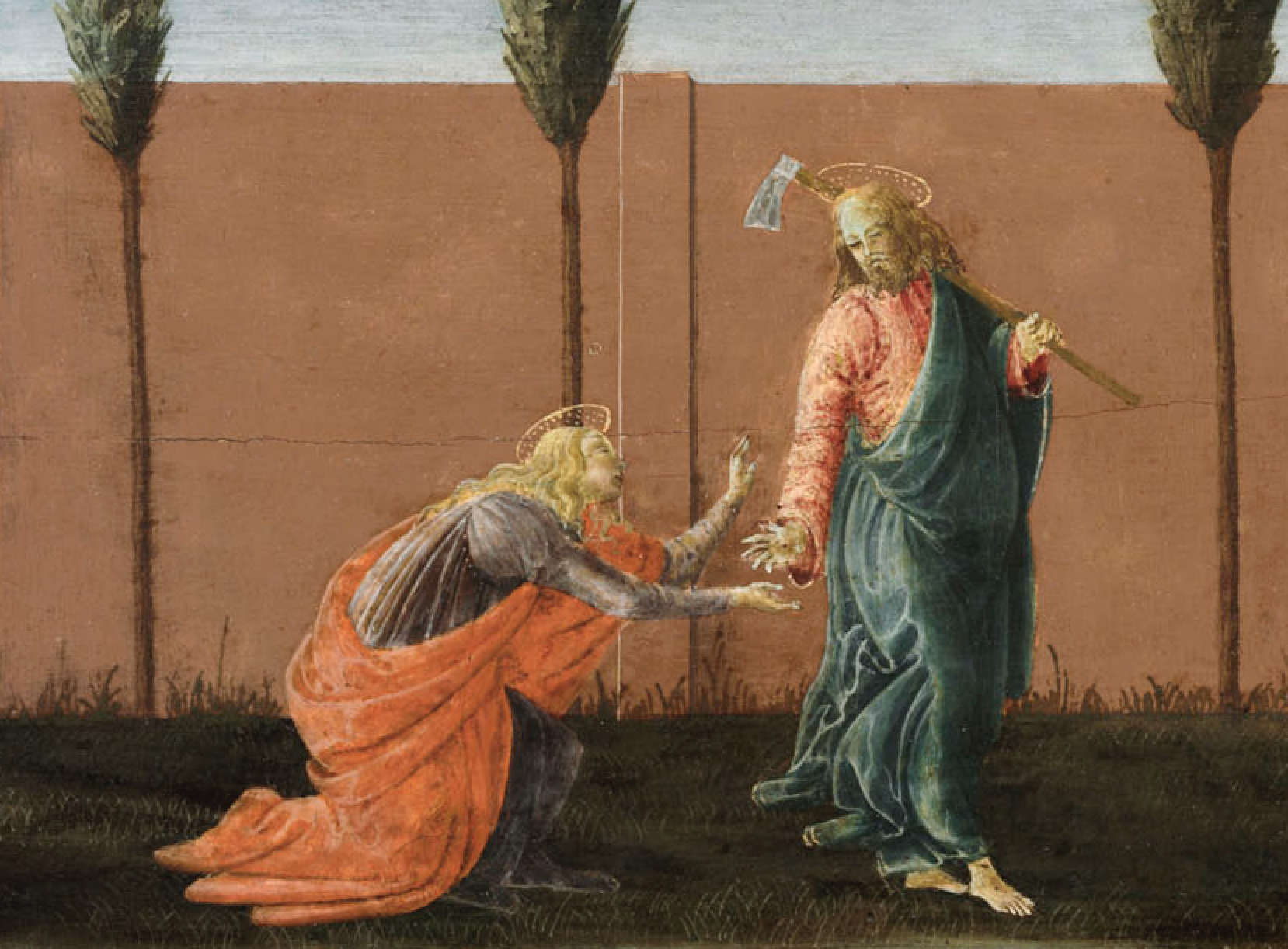
In this post, Gillian Jack introduces her new book — Prostitution, Repentance and Social Welfare in Renaissance Florence. The Monastery of Sant’Elisabetta delle Convertite — which is published in October 2026 as part of the Society’s ‘New Historical Perspectives’ series with University of London Press.
From the fourteenth century, prostitutes in Florence were encouraged to leave their profession and spend their lives in repentance at the monastery of Sant’Elisabetta delle Convertite. Gillian’s is the first book-length study to put Sant’Elisabetta into its full historical context.
Drawing on diverse archival sources, the book’s long chronological scope offers valuable insights into the broader histories of the relationship between the Florentine state and monastic institutions, public policy, welfare and women in the long Renaissance.
Prostitution, Repentance and Social Welfare in Renaissance Florence is the 27th title in the Society’s New Historical Perspectives series for early career historians.
Gillian’s book, and all other titles in the series are published free, Open Access, and in paperback print.
In 2016, Pope Francis made international headlines when he visited a safe house in Rome where women who had escaped trafficking for prostitution were living. He spent some time with the women, listening to their stories and chatting with them. A Catholic charity would help them build new lives. Journalists found the juxtaposition of the holy man and the sex workers to be too titillating to pass up.
However, this was far from the first time the Church had taken an interest in the welfare of women who wanted to leave sex work.
In the medieval period, a frequent response was to offer these women a religious solution: to become nuns in a dedicated monastery. This practice goes back to sixth-century Byzantium but developed more fully in France and Italy in the thirteenth and fourteenth centuries.
In Florence, the monastery of Sant’Elisabetta delle Convertite, which is the focus of my new book, opened in 1330. ‘Convertite’ means ‘converted women’ and indicates women who had converted from sin to repentance. They had chosen to leave prostitution and dedicate the rest of their lives to religion.
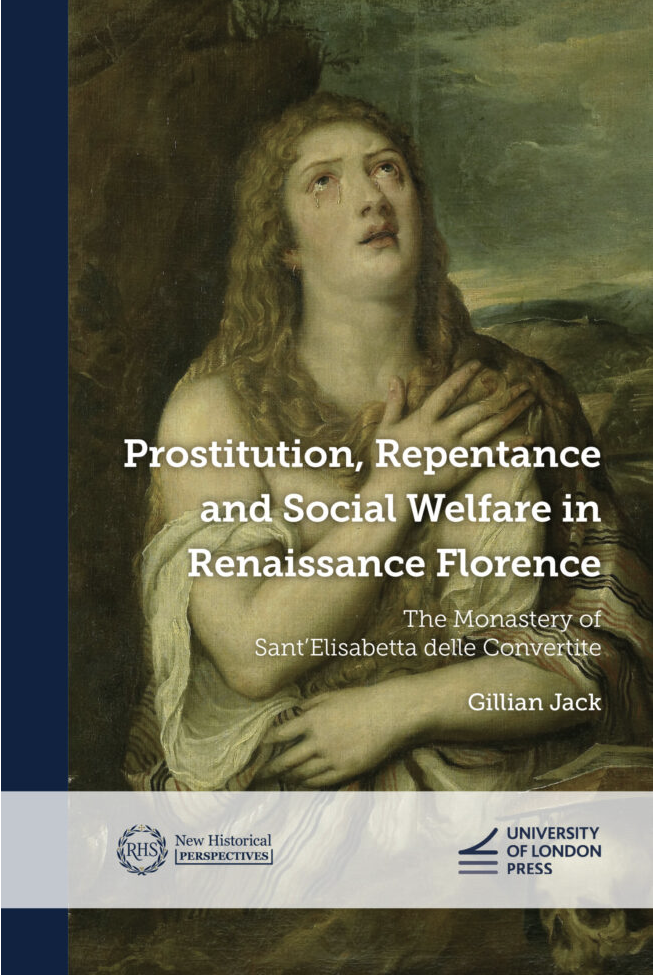
My book, Prostitution, Repentance and Social Welfare in Renaissance Florence: The Monastery of Sant’Elisabetta delle Convertite, looks at this unique Florentine institution across a broad swathe of history from the late thirteenth to the mid-seventeenth century.
My research reveals the extent to which change was felt by the convertite nuns, almost all of them former prostitutes, in a crowded and underfunded monastery located in the poor, immigrant neighbourhoods of the Oltrarno district.
This long period allows me to place Sant’Elisabetta in its full historical context for the first time, from its precursor religious houses to its eventual incorporation into the Medici grand ducal administration under Cosimo II (1590-1621). It was a period of significant change for the city, and my research reveals the extent to which these changes were felt by the convertite nuns, almost all of them former prostitutes, in a crowded and underfunded monastery located in the poor, immigrant neighbourhoods of the Oltrarno district.
The Florentine authorities were unusually innovative in their approach to prostitution. Like many medieval cities, they had tried to ban it from the area within the walls in the thirteenth and fourteenth centuries. This was partially successful, relegating prostitution to the area beyond the walls, though this necessitated further legislation to try to keep the women from plying their trade too close to religious buildings.
However, this was not a strategy that worked in the longer term. The practice crept back into cities, to areas from which it was prohibited. Legislation was written and reiterated in attempts to keep the area within the walls free of sex work.
However, the beginning of the fifteenth century brought significant changes to Florence’s approach to prostitution. In 1404, the practice that had been banished to beyond the walls was not only permitted in the city but facilitated at its very heart.
A new magistracy was established to manage prostitution and, most importantly, collect fees from prostitutes who registered so that they could work legally.
A new brothel district was established between the cathedral of Santa Maria del Fiore and the seat of civic government, the Palazzo della Signoria. The area was known as the Malacucina (‘bad kitchen’) and already had a long-established reputation for illicit prostitution. A new magistracy was established to manage prostitution and, most importantly, collect fees from prostitutes who registered so that they could work legally. The men tasked with this were the Ufficiali dell’Onestà (Officers of Decency). This was all part of a wider push to enforce civic morality, and the Onestà were joined by magistrates who were to oversee the prosecution of sodomy, others to ensure that nuns’ honour was preserved, and yet more to combat corruption in public office.
This was clearly a major change in the city’s attitude to prostitution from the city authorities. It was, in part, motivated by concerns that the population had not recovered from the ravages of the Black Death. Authorities feared that men were put off marrying by a combination of women’s expensive taste in clothing and jewels, and the availability of male sexual partners.
The first problem was solved by sumptuary legislation. The second was tackled by carrot-and-stick approach. On the one hand, men were ‘reminded’ of the pleasures of heterosexual intercourse courtesy of the female sex workers in the Malacucina. On the other, male homosexual intercourse was subject to a raft of new legislation which encouraged denunciations and was overseen by the Ufficiali di Notte (Officers of the Night).
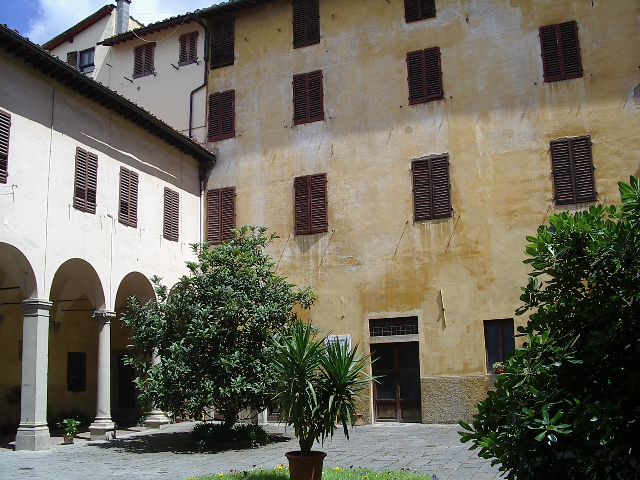
Cloister of the Monastery of Sant’Elisabetta delle Convertite, Florence, photograph taken by the author.
The effect of this new approach on Sant’Elisabetta delle Convertite took some years to manifest but in 1447, the Ufficiali di Notte were ordered to send a portion of the fines they collected, along with a gift of victuals to the nuns.
This meant that Sant’Elisabetta was the only monastic house in the city to receive regular, formalised municipal support though, curiously, the city government secured this funding from the policing of male homosexual activity and not from the licensing of prostitution, which had a more obvious connection to the nunnery. It would not, however, be the last time the city employed this method, and I explore the myriad ways in which the city sought to shore up the precarious finances of this monastery, and why.
The city’s toleration of prostitution was a critical factor in its support for Sant’Elisabetta. The monastery provided a pious alternative to the sinful profession that the city facilitated and so its continued function was vital.
Over the course of the next two hundred years, various attempts were made to secure Sant’Elisabetta. The monastery was always crowded and always poor. Unlike most other houses, the nuns there did not have wealthy relatives to support them and local charity was meagre. The city’s toleration of prostitution was, I argue, a critical factor in its support for Sant’Elisabetta.
The monastery provided a pious alternative to the sinful profession that the city facilitated and so its continued function was vital. While other convertite monasteries were short-lived or were overtaken by more traditional nuns, Sant’Elisabetta stayed uniquely true to its founding purpose. In fact, it did not close until 1808, during Napoleon’s suppression of religious houses.
The nuns of Sant’Elisabetta lived on the margins as prostitutes and then as poor nuns. They navigated worlds of deprivation and want, taking on work and appealing to benefactors as best they could. They were industrious, shrewd and, like the monastery that was their final home, survivors.
About the author
 Dr Gillian Jack is a historian of late medieval and early modern Italy, with a focus on poor women and girls in Florence.
She is currently an Associate Lecturer at The Open University where she has taught history from Greek myth to the 1970s.
Prostitution, Repentance and Social Welfare in Renaissance Florence: The Monastery of Sant’Elisabetta delle Convertite (October 2026) is her first monograph.
About the ‘New Historical Perspectives’ book series from the Royal Historical Society
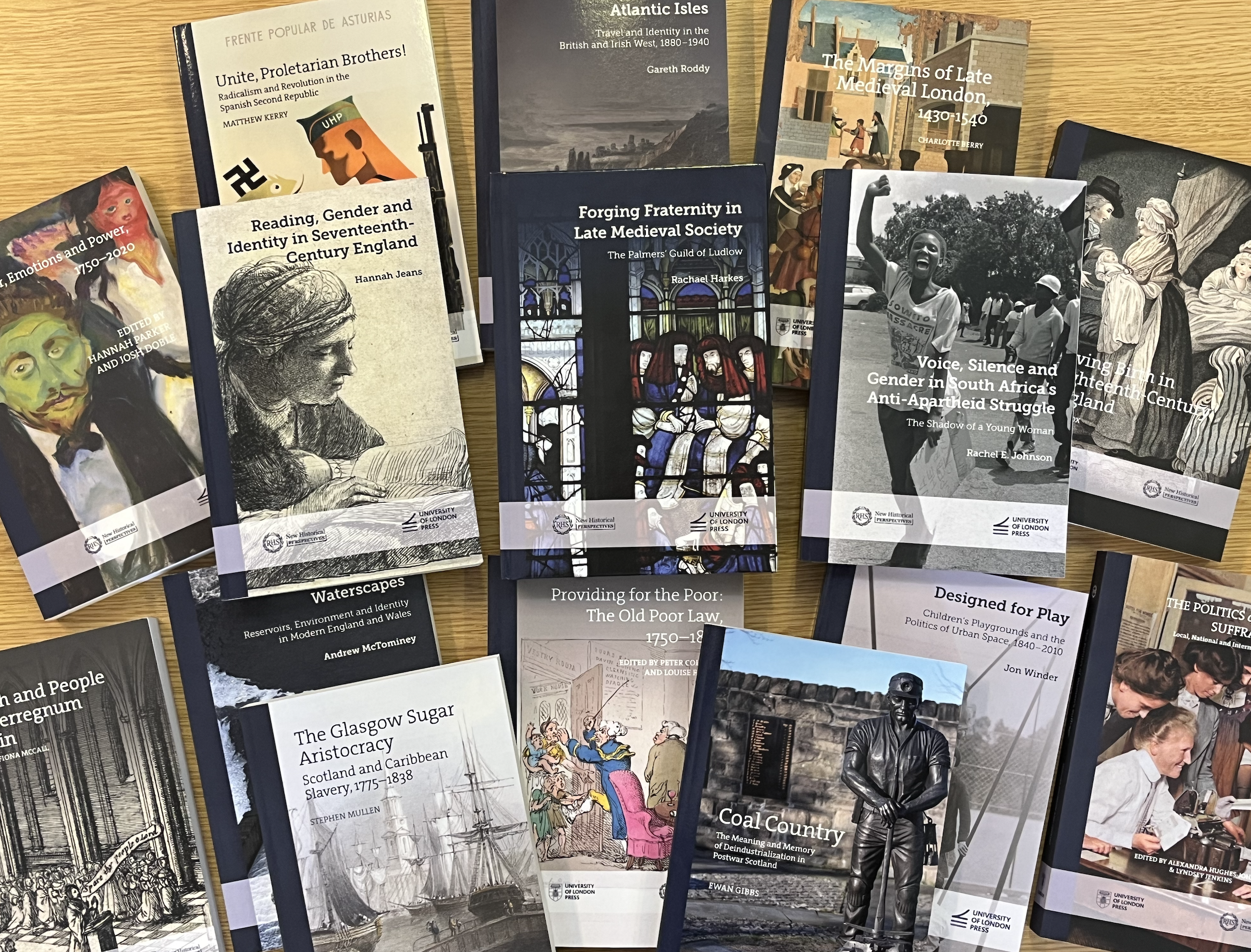
New Historical Perspectives (NHP) is the Society’s book series for early career scholars (within ten years of their doctorate), commissioned and edited by the Royal Historical Society, in association with University of London Press and the Institute of Historical Research, and with support from the Economic History Society.
The series publishes monographs and edited collections by early career historians on all chronologies and histories, worldwide. Contracted authors receive mentoring and an author workshop to develop their manuscript before its final submission.

All 27 titles in the series are published in paperback print and Open Access (as pdf downloads and Manifold reading editions) with costs covered by University of London Press and the Royal Historical Society.
Prostitution, Repentance and Social Welfare in Renaissance Florence: The Monastery of Sant’Elisabetta delle Convertite is the 27th volume published in the series (October 2026). For more on recent and forthcoming titles in the series please see here.
HEADER IMAGE: Sandro Botticelli, ‘Noli Me Tangere’, c. 1484–1491 (detail), tempera on panel, 19.8 x 43.7 cm, Philadelphia Museum of Art: John G. Johnson Collection 1917, Cat. 46. CC0 / Public domain.
This and other images by Sandro Botticelli, now in the Philadelphia Museum of Art, were originally house in the monastery of Sant’Elisabetta delle Convertite.
