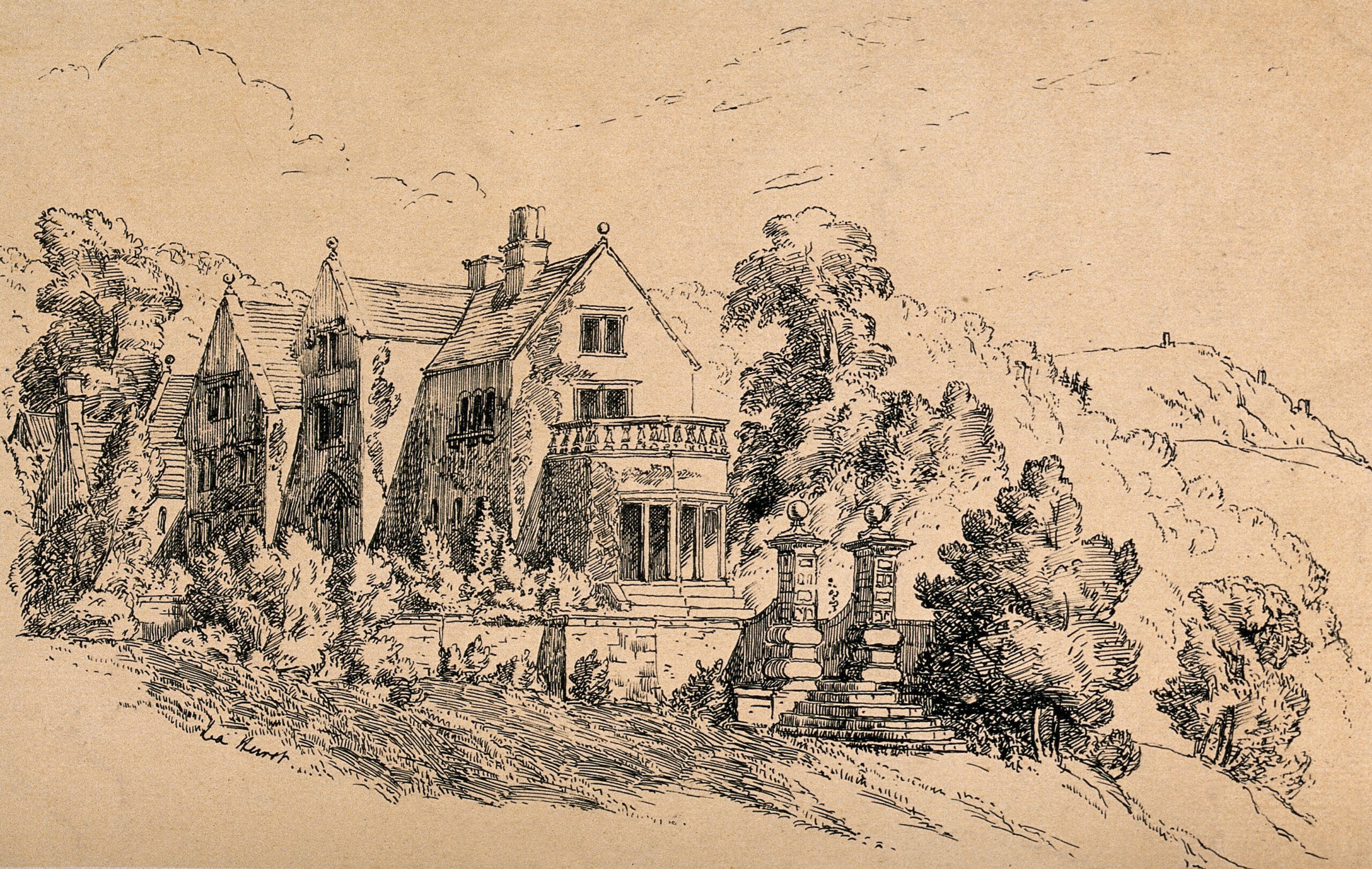
Florence Nightingale (1820-1910) is a celebrated figure in British history, yet her connections to Derbyshire are less widely understood. The Nightingale family’s wealth was rooted in the industrial economy of Derbyshire, particularly around Cromford and Lea Bridge.
Their home at Lea Hurst served as an important retreat, where Florence returned after the Crimean War and later cared for her dying mother. The Arkwright Society, the charity with looks after Cromford Mills, part of the Derwent Valley World Heritage Site, and the Florence Nightingale Derbyshire Association wanted to explore new ways of celebrating the legacy of Florence Nightingale.
In this post, Dr Kathleen McIlvenna and Dr Jo Ray reflect on activities supported by their RHS Scouloudi Public History Grant, 2025-26 for students to undertake research at Cromford Mills and develop a new exhibition.
Florence Nightingale (1820-1910) is a celebrated figure in British history, yet her connections to Derbyshire are less widely understood. The Nightingale family’s wealth was rooted in the industrial economy of Derbyshire, particularly around Cromford and Lea Bridge. Their home at Lea Hurst served as an important retreat, where Florence returned after the Crimean War and later cared for her dying mother.
Nightingale also showed a sustained interest in local health and welfare. The Derbyshire Record Office preserves her correspondence with Dr. Christopher Dunn, revealing both her knowledge of local conditions and her concern for improving them. She offered financial support for medical treatment and education and was consulted on the development of a new hospital in Derby. Today, her legacy is visible in local commemorations, including a blue plaque, themed heritage trails, and buildings named in her honour within regional hospital trusts.
Project Origins
‘Re-interpreting Florence Nightingale in Derbyshire’ was conceived as a collaborative, student-focused public history project. It aimed to update and expand existing interpretations of Nightingale’s legacy through the lenses of health, innovation and place.
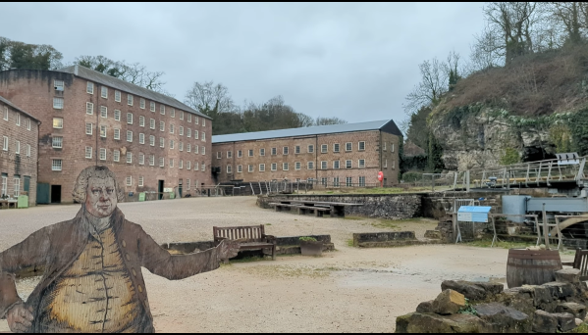
Cromford Mills, a World Heritage Site managed by the Arkwright Society. Copyright Kathleen McIlvenna
The Arkwright Society, the charity with looks after Cromford Mills, part of the Derwent Valley World Heritage Site, and the Florence Nightingale Derbyshire Association wanted to explore new ways of celebrating the legacy of Florence Nightingale. A temporary exhibition produced in 2010 with the University of Nottingham. However, it had deteriorated and was no longer suitable for use. This presented an opportunity for the University of Derby, and teams from History, Design and Nursing, to collaborate with the Arkwright Society building on their Special Partnership Agreement.
Supported by the Scouloudi Public History Grant from the Royal Historical Society, the project planned for students to undertake research at Cromford Mills and develop a new exhibition.
Nightingale as Authentic Assessment
Across the 2025/26 academic year, MA History and Heritage and MA Design students worked on the project, producing a range of outputs while developing professional and creative skills.
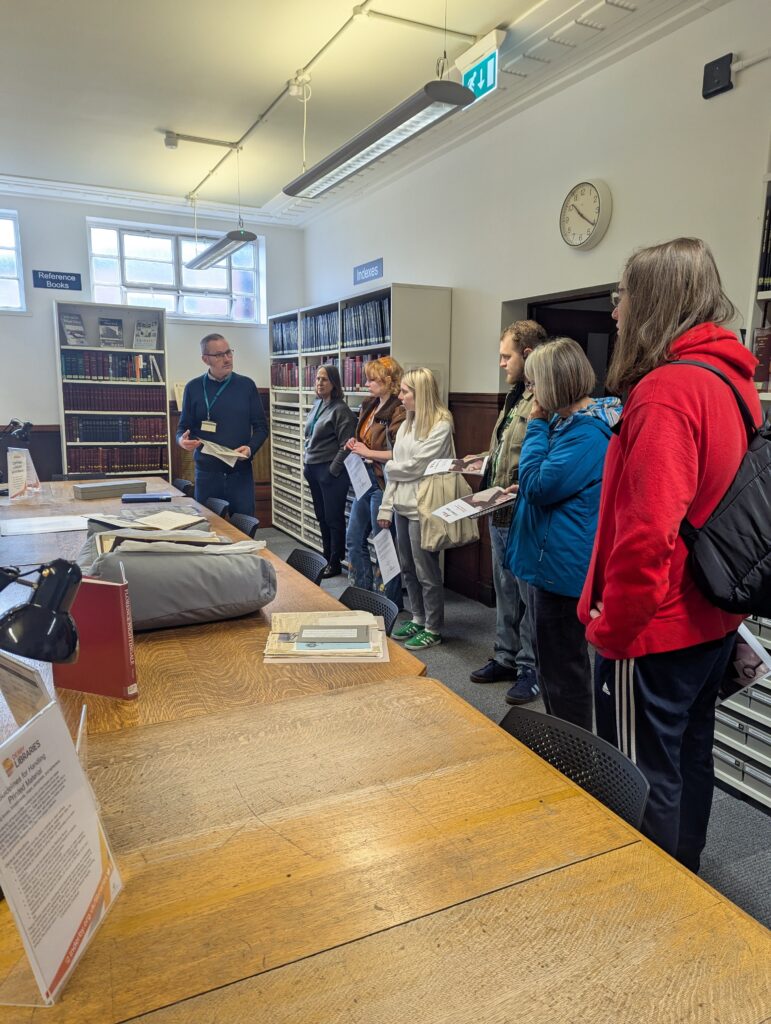
MA History and Heritage students’ visit to Derby local archive. Copyright Kathleen McIlvenna
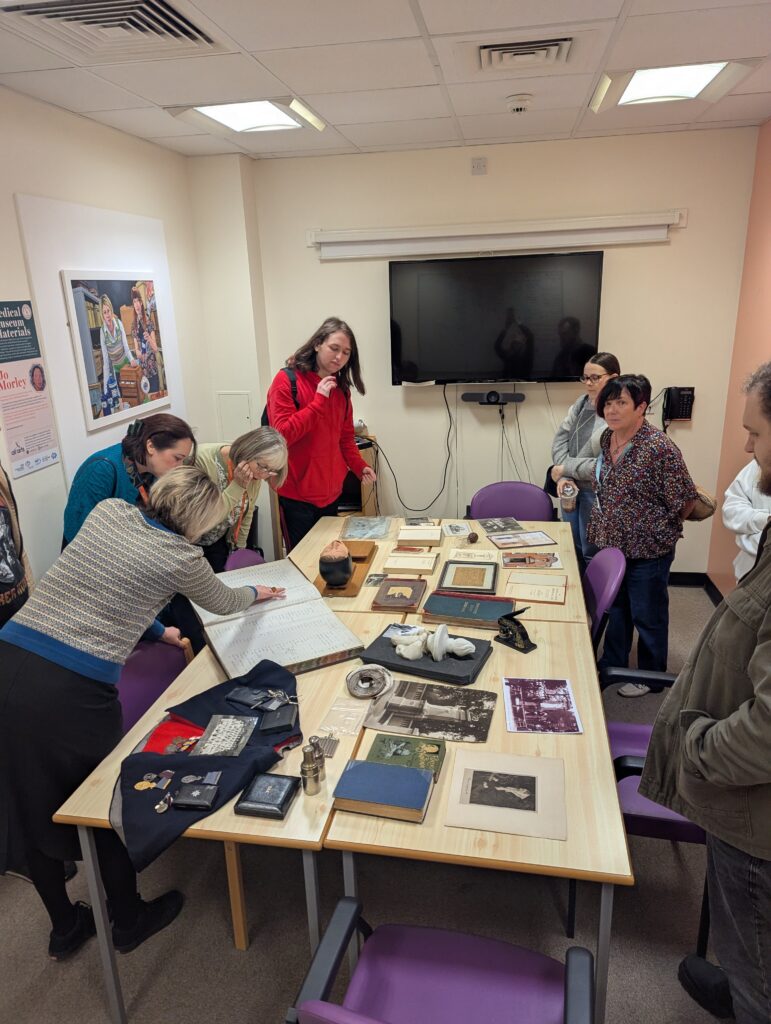
MA History and Heritage students’ visit to Derby Royal Hospital archive. Copyright Kathleen McIlvenna
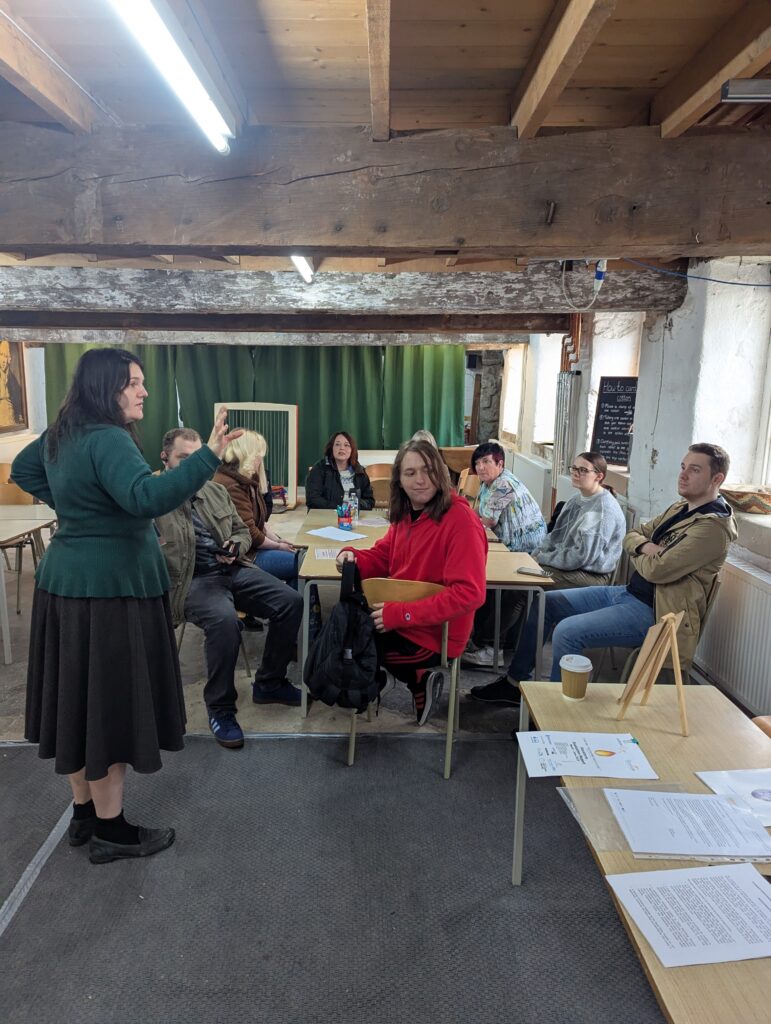
MA History and Heritage students’ visit to Cromford Mills to look at original Florence Nightingale Exhibition and discuss with Kate Crossley from Arkwright Society, what the Society wanted. Copyright Kathleen McIlvenna
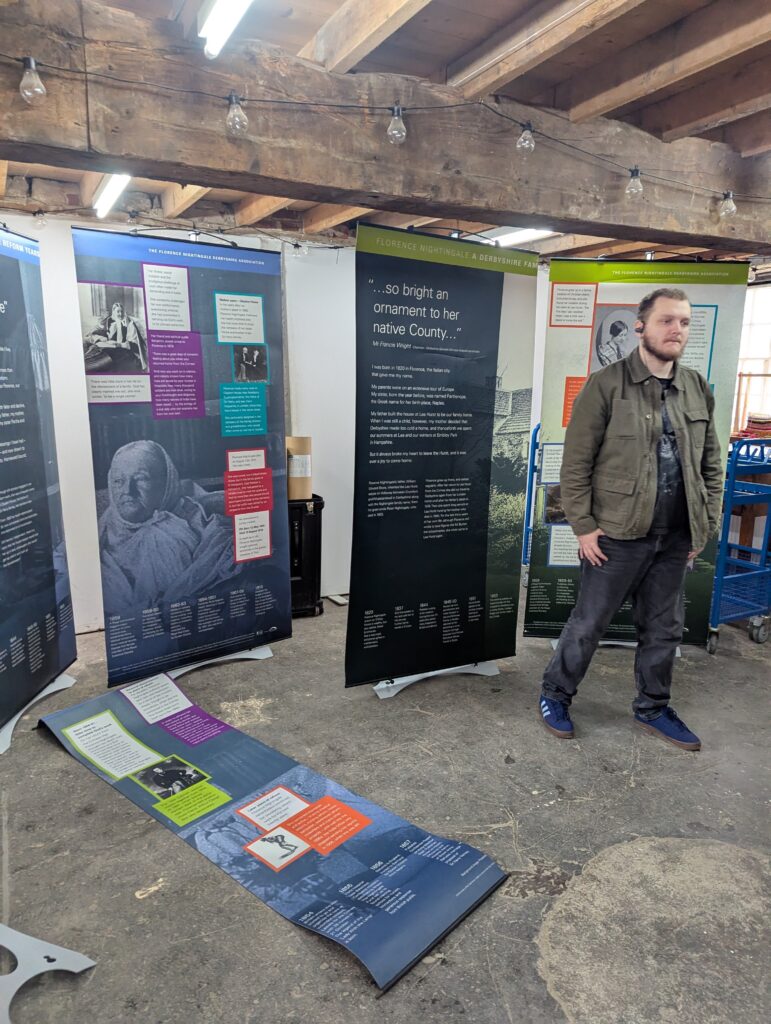
MA History and Heritage students’ visit to Cromford Mills to look at original Florence Nightingale Exhibition and discuss with Kate Crossley from Arkwright Society, what the Society wanted. Copyright Kathleen McIlvenna
History students completed a portfolio assessment divided into two parts. First, they developed an interpretation plan for the exhibition, each researching and writing a panel while making decisions about audience, tone and presentation. Second, they produced a business proposal inspired by their research.
These proposals explored ideas such as co-produced exhibitions on the “industrial revolution of nursing” and strategies for increasing engagement and revenue through live events and fright nights.
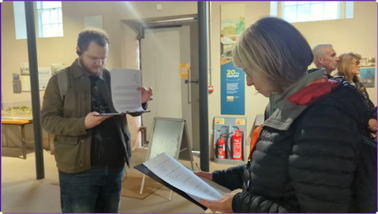
Two MA History and Heritage students collecting audience data onsite at Cromford Mills. Copyright Kathleen McIlvenna
Students supported their proposals with audience research, including site visits to Cromford Mills where they consulted visitors, volunteers and local businesses.
They then presented their work to project partners, including the Arkwright Society and colleagues from Design and Nursing, incorporating feedback into their final submissions.
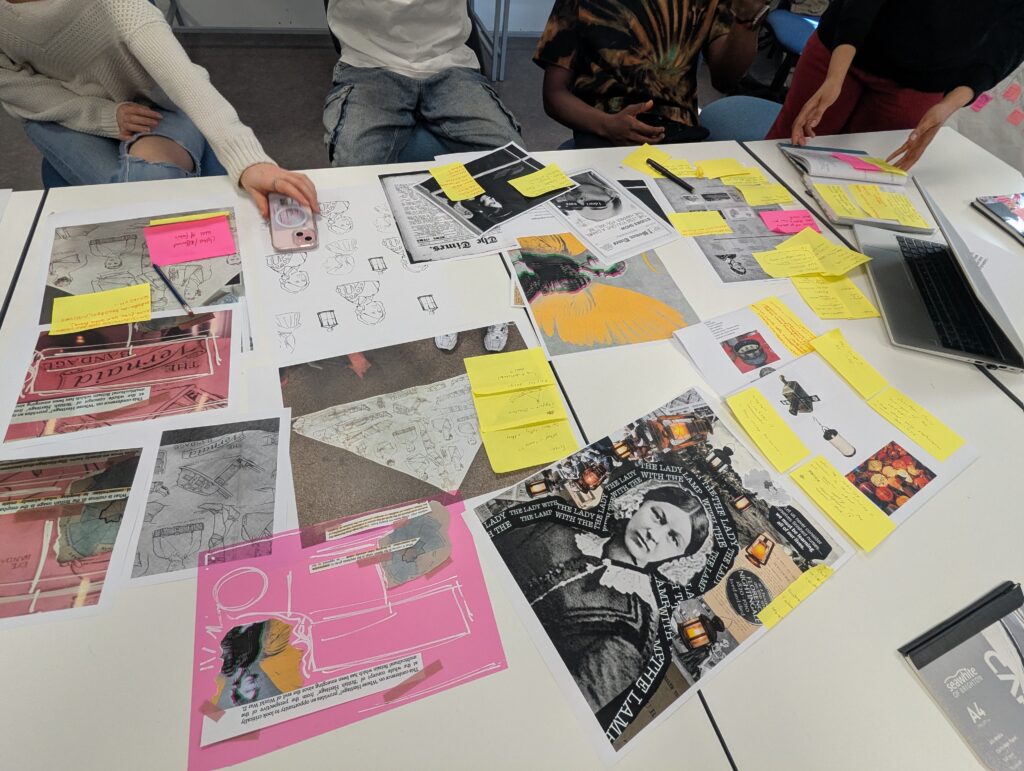
MA Design students testing and exploring ideas. Copyright Kathleen McIlvenna
MA Design students contributed via a 5 session ‘Design lab’ exploring Heritage Interpretation principles. Drawing inspiration from artefacts in the collection at the Derby Royal Hospital archive, they made creative interpretative works intended to generate new conversations or questions around Florence Nightingale: her legacy, conceptions and constructions of her both as a person and historical figure, and wider experiences of healthcare.
Their diverse responses included a bandage inspired by Nightingale’s infographics and hospital designs, a 3D printed character – a comforter or companion for people in care settings, inspired by blue glassmedical bottles and ideas about miasma and memento mori.
These ‘sideways’ projects will be presented alongside the history and heritage students interpretation panels
The Nursing team played a vital role in grounding the project in professional perspectives. They provided teaching sessions on Nightingale’s contemporary significance and supported student research. History students also gathered feedback from over seventy mental health nurses, adding a valuable audience perspective for their business proposal.
International Nurses Day 2026
The project culminated in the launch of a prototype exhibition, Lady Behind the Lamp: The Story of Florence Nightingale Retold, on 12 May 2026, International Nurses Day.
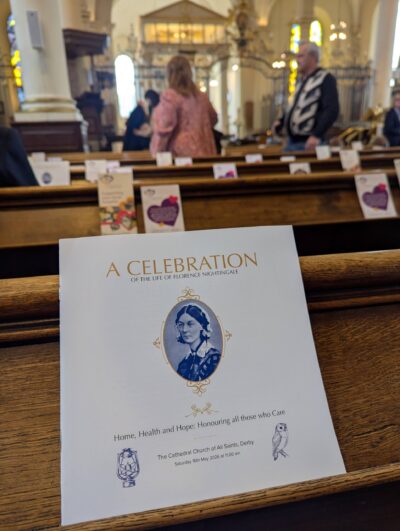
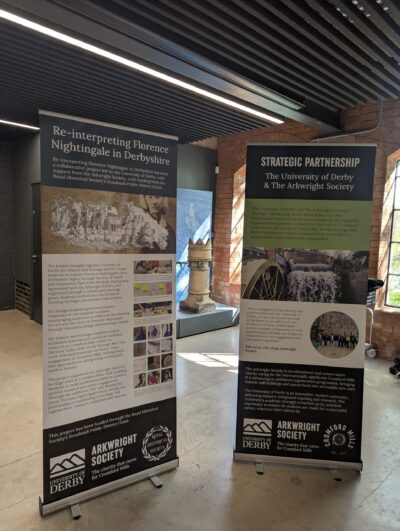
Programme for the Derby Cathedral celebration for International Nurses’ Day, and banners celebrating the collaboration between University of Derby and the Arkwright Society for the event. Copyright Kathleen McIlvenna
The exhibition formed part of a celebration hosted by the University of Derby’s School of Nursing and Midwifery, where attendees viewed the displays alongside student researchers. It was also showcased at events hosted by Derby and Burton Hospital Trust, highlighting the partnership between the University and the Arkwright Society.
The Future
The exhibition launched in May 2026 was a prototype, designed to present initial research and concepts. The final version, developed in collaboration with Design students, is scheduled for completion in July 2026.
Plans are in place to display the finished exhibition both at the University of Derby and at Cromford Mills, with further opportunities for collaboration being explored with local heritage and healthcare partners. The Arkwright Society is also interested in developing selected student proposals, ensuring that the project has a lasting impact beyond the classroom.
Reflection
This project demonstrates the value of collaboration in public history, particularly when centred on student learning. While managing partnerships requires time and coordination, particularly difficult when staff personnel change, it still provides significant rewards in terms of student development and community engagement.
Through their work with the Arkwright Society and other partners, students gained practical experience in research, interpretation and audience engagement. They developed confidence in presenting ideas, responding to feedback and applying creative approaches to historical material. Importantly, they were able to connect academic study with real-world impact, contributing to the ongoing interpretation of Florence Nightingale’s legacy in Derbyshire.
About the Authors
Dr Kathleen McIlvenna is Senior Lecturer in History with interests in nineteenth-century British social and economic history and public history at the University of Derby.
Dr Jo Ray is an artist and practice led researcher, and Senior Lecturer in Design at University of Derby.
About the RHS Scouloudi Public History Grants

Scouloudi Public History Grants support innovative practice in public history and provide funding for defined projects by historians working together in and beyond higher education.
Launched in 2025, this programme is generously supported by the Scouloudi Foundation.
HEADER IMAGE: Lea Hurst, Home of Florence Nightingale’s family in Derbyshire. Lithograph, ca. 1880. Wellcome Collection. Source: Wellcome Collection.
