In this post, Wendy Davies describes a recent meeting of fellow historians to discuss their research on the everyday lives of ordinary working people in the early middle ages. The group has met and shared research over a number of years, with members in turn hosting weekend meetings.
The historians who come together share an interest in the strategies by which early medieval people maintained food, shelter and health, communicated knowledge, and interacted with the world beyond the local. And, as Wendy describes here, the main purpose of this year’s gathering was to debate and plan a book, ‘Making and Moving Consumables in Early Medieval Europe: From the Local to the Wider World’.
The project is one of six networks of historians supported by the award of an RHS Workshop Grant in 2026. The latest call for this programme, which funds group meetings by historians, is now available and runs to 15 January 2027.
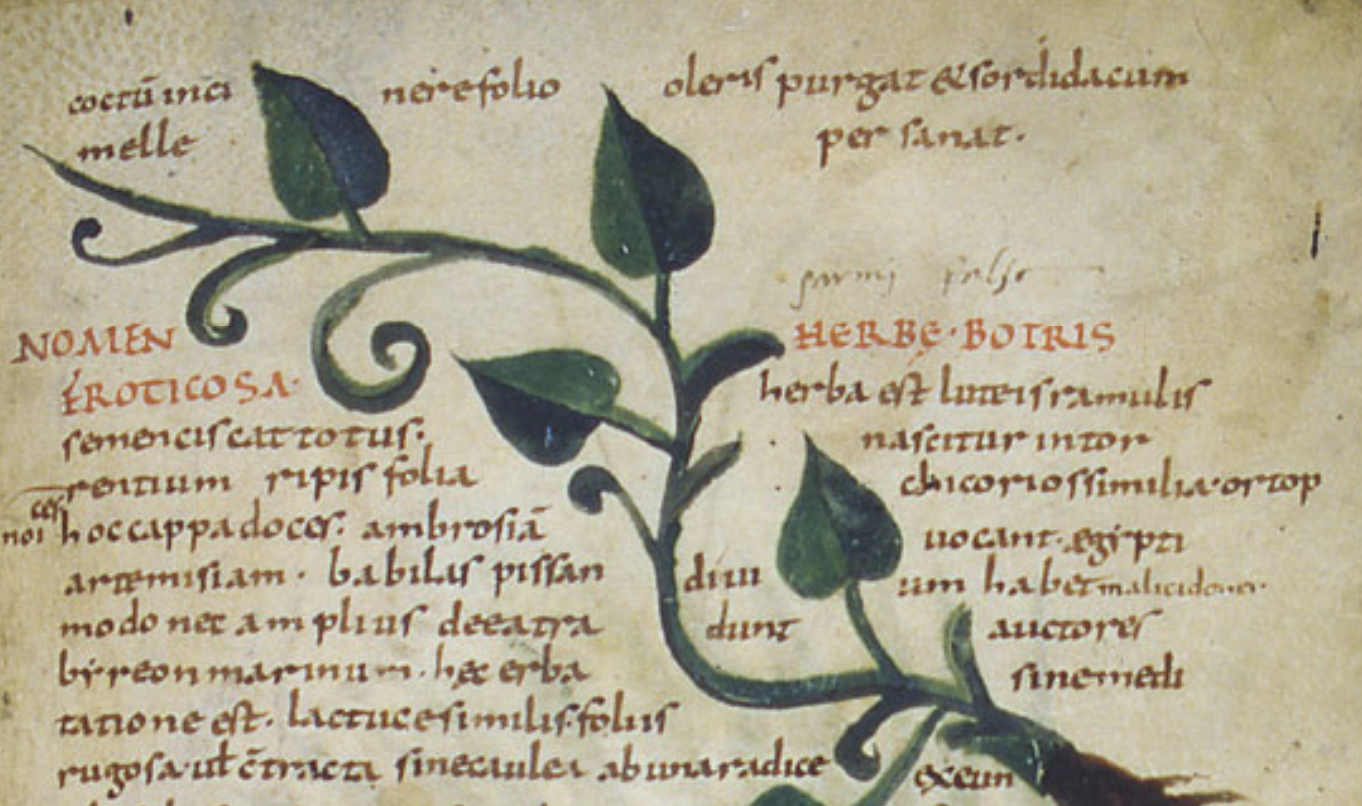
Main image credit (above): Lucca BS 296 f. 43r; 10th-century miscellany of recipes from N Italy.
A group of early medieval historians and archaeologists met at my house in early September 2026: Sebastian Brather from the University of Freiburg, Claire Burridge from the University of Oslo, Thomas Kohl from the University of Passau, Catarina Tente from the New University of Lisbon, Nicolas Schroeder from the Université Libre de Bruxelles, Marco Stoffella from the University of Verona, Charles West from the University of Edinburgh, Bernhard Zeller from the Institute for Medieval Research in Vienna; Carine van Rhijn (University of Utrecht) and Francesca Tinti (University of the Basque Country) joined us online.
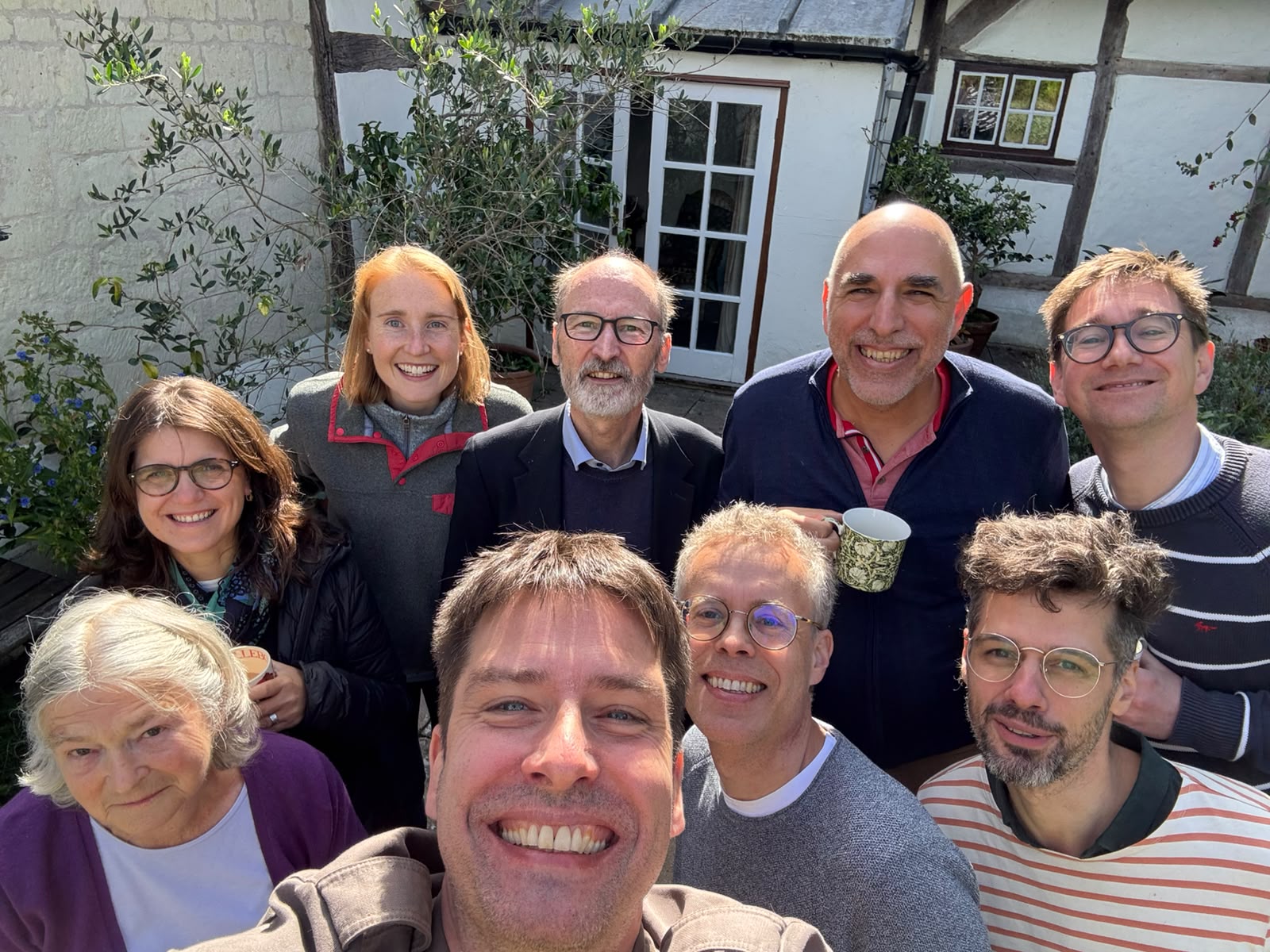
The group
Getting them to a small village in Oxfordshire, not served by public transport, was logistically challenging but a combination of train, buses, taxis and my car brought everyone together by the end of Monday afternoon. Four stayed with me; three in the pub; and one in our local AirB&B; we had one evening meal in the pub but I cooked most of the food.
The award of a Royal Historical Society ‘Workshop Grant’ helped us to gather and work together in rural Oxfordshire. It was my turn to host but I retired many years ago and do not have access to institutional support. The RHS grant enabled us to meet in this location.
We are interested in the everyday lives of ordinary working people in the early middle ages … as such, they did not leave records of their life experience, but a wide range of archaeological evidence survives from rural settlements and there is a surprising amount of relevant written text.
We are interested in the everyday lives of ordinary working people in the early middle ages – their strategies to maintain food, shelter and health; their methods of passing on knowledge; their interactions with the world beyond the local.
Since most people lived in the countryside at this time, most ordinary working people were peasant farmers; as such, they did not leave records of their life experience, but a wide range of archaeological evidence survives from rural settlements and there is a surprising amount of relevant written text – in stories from Saints’ Lives, in collections of cures for common ailments, in charters recording peasant dealings in small plots of land, in blessings and prayers.
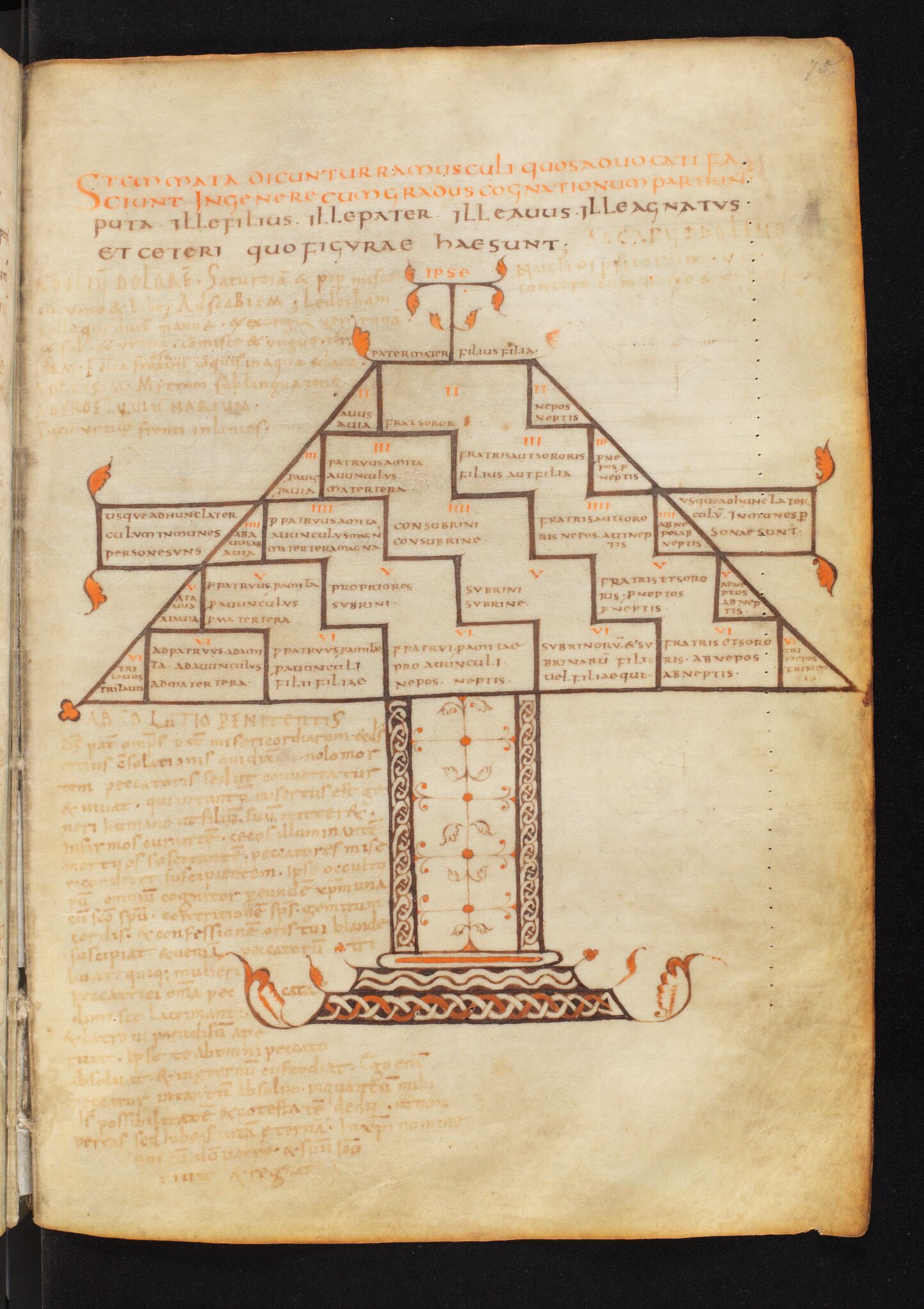
Bern Burgerbibliothek, Cod. 224, f. 75r; 10th-century recipes for intestinal pain, itchiness, cough, a ‘flowing nose’ and head pain.
Most of us have worked together before, on aspects of the functioning of local societies. For this phase we decided to work on the material dimension and, in particular, on consumables: what food, clothes, tools did they have, and how did this vary across Europe; what did they reuse and repair; what did they make themselves and what did they get from beyond, and if the latter how and from where; who were the agents of movement; what knowledge was involved in production and use and how was that transmitted across time and space.
For the last four years we have each contributed detailed evidence from our own areas of expertise … and the main purpose of this year’s meeting was to plan a book.
With those questions in mind we have mobilized material and textual sources and submitted them to a shared comparative questionnaire. We don’t recognize an archaeological/historical divide: in addressing the questions all kinds of evidence are relevant. For the last four years we have each contributed detailed evidence from our own areas of expertise, saved in a shared dropbox folder, and the main purpose of this year’s meeting was to plan a book, although we also heard some papers on local knowledge.
The book title is Making and Moving Consumables in Early Medieval Europe: From the Local to the Wider World. This is how we made the plan. Beginning with a list of the questions we have been addressing, we projected the list on to the wall of my dining room (Nicolas brought his departmental projector from Brussels). Everyone shouted out additions, deletions and changes, with Thomas constantly recording on his laptop so that the list on the wall changed. It took three sessions to get a viable plan, which is thematically not regionally organised: Sources, methods, definitions; Settlements; Making, using, consuming; Transport and communications; Local knowledge.
We decided, following online input from Carine, to frame the book in the context of history of knowledge – for us, a new way of thinking. Knowledge, therefore, about agrarian and artisanal techniques, about geography, resources, animals, plants, materials, routes, trackways, rivers and waterways, navigation, markets, taste, diet, and health. We will make the most of the overlap between these different spheres of everyday life, rather than treating these different forms of knowledge separately – that is, as histories of techniques, agriculture, medicine, food, religion, and so on.
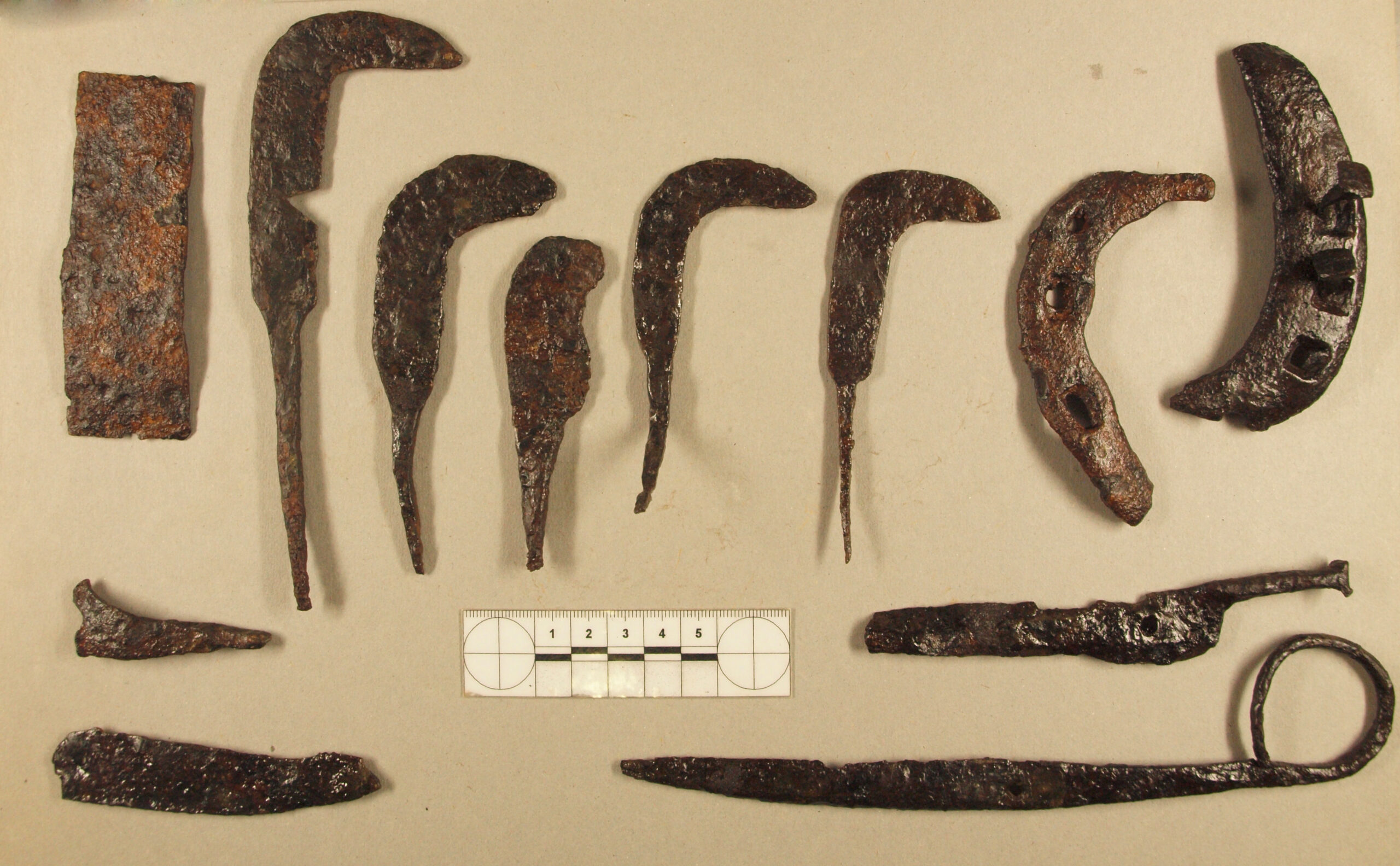
8th- 13th-century tools recovered from Zaballa in the Basque Country: note the 10th-century fragment of scissors, one up from bottom right. From D. Larreina Garcia, ‘Technology and social complexity: iron tools and peasant communities in the medieval period’, in J. A. Quirós Castillo (ed.), Social complexity in early medieval rural communities, Oxford: Archaeopress, 2016, pp. 79-89.
We also decided to write the book in the way we wrote Neighbours and Strangers. Local Societies in Early Medieval Europe (2020), that is as a jointly authored book rather than an edited set of separate regional chapters. This meant assigning a pair of writers (in one case three) to each projected chapter, with the task of digesting the relevant collected regional contributions in the dropbox, seeking further detail where necessary and drafting a coherent chapter for comment by everyone. We expect drafts by the end of June 2027 and hope to meet to discuss them in Brussels, in October of that year.
About the author
Wendy Davies FBA is Emeritus Professor of History at University College London. Until her retirement in 2007, Wendy taught medieval European history in which field she continues to research and publish.
In 2026, Wendy was the recipient of an RHS Workshop Grant to support group working by historians on a defined project
About RHS Workshop Grants

Workshop Grants enable historians to come together to pursue projects of shared interest. Projects are broadly defined and may focus not only on academic research but also a wider range of activities. Grants offer £1,000 for hosting a day event. Workshops support a wider range of group activities relating to history.
These may include: discussion of an existing research topic or project; beginning and testing a research idea, leading to a future project; piloting work relating to the teaching, research or communication of history; planning and writing a grant application; and undertaking networking and building of academic communities.
The call for the next round of RHS Workshop Grants opened on Monday 26 October and runs to Friday 15 January 2027. Applications are welcome for activities to be held in 2027 or early 2028.
HEADER IMAGE: Lucca BS 296 f. 43r; 10th-century miscellany of recipes from N Italy.
